
Your Child’s First Dental Visit: What Every Parent Should Expect
A child’s first dental visit can feel like a big milestone for parents. You may wonder whether your child is too young, what the dentist will actually do, or how your little one will react to someone examining their mouth. These are common concerns, especially when your child has never experienced a dental appointment before.
The first visit is about much more than checking for cavities. It gives a pediatric dental team an opportunity to assess your child’s teeth, gums, bite, oral development, and daily hygiene habits. Just as importantly, it helps your child become familiar with the dental office in a calm and supportive setting.
The American Dental Association recommends that children have their first dental visit by the time their first tooth appears or by their first birthday. Starting early allows dental professionals to identify potential concerns and give parents practical guidance before small issues become larger ones.
Knowing what to expect can make the experience easier for both you and your child. With a little preparation and a positive attitude, the first dental appointment can become the beginning of a healthy relationship with dental care.
1. When Should Your Child Have a First Dental Visit?
Many parents assume they should wait until their child has several teeth or until something appears wrong. In reality, dental care should begin much earlier.
A child should generally see a dentist when the first tooth comes in or no later than the first birthday. Early appointments allow the dentist to monitor how the teeth and jaws are developing and identify concerns that may not be obvious to parents.
The dentist can also discuss brushing, fluoride, nutrition, pacifier use, thumb sucking, and habits that may affect oral development. Establishing a dental home early also means your child has a familiar place to receive care as they grow.
2. What Happens During the First Dental Exam?
The first appointment is usually designed to be gentle and age-appropriate. The dentist may begin by talking with you about your child’s medical history, eating habits, brushing routine, fluoride exposure, and any concerns you have noticed.
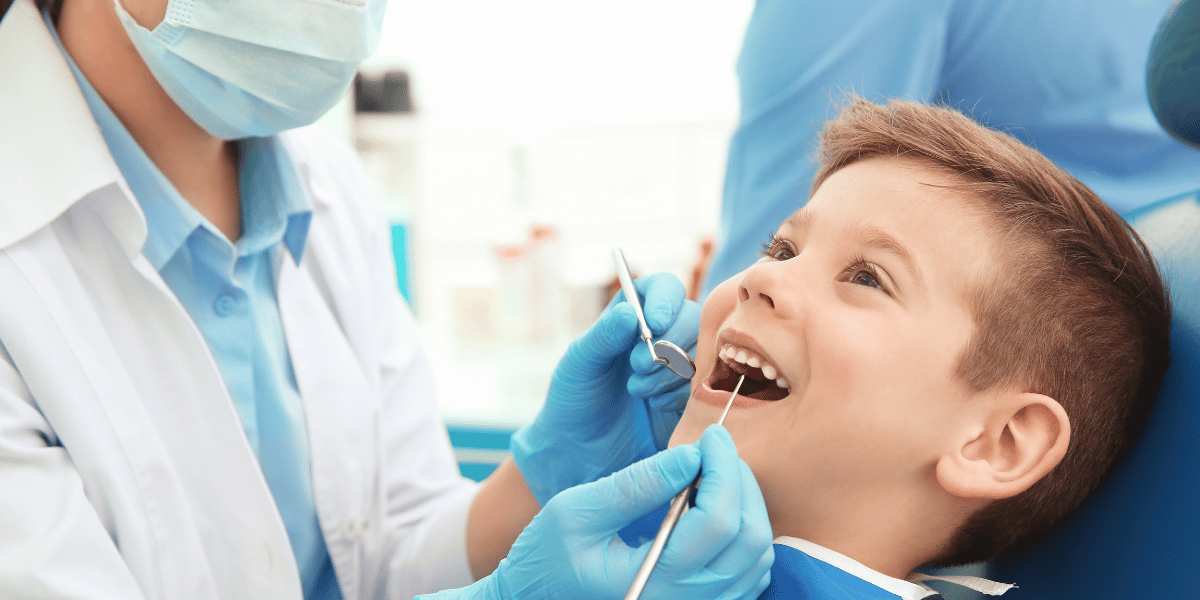
Depending on your child’s age and cooperation, the dentist will examine the teeth, gums, tongue, cheeks, and surrounding tissues. They may look for early signs of tooth decay, developmental concerns, enamel problems, or issues involving the bite.
For very young children, the examination may be performed while the child sits on a parent’s lap. This can help the child feel more secure.
3. Will My Child Get a Dental Cleaning?
Not every first dental visit includes a traditional cleaning. It depends on your child’s age, number of teeth, oral health, and comfort level.
If appropriate, the dental team may gently clean the teeth and remove plaque or buildup. The dentist may also discuss whether fluoride treatment is recommended based on your child’s individual risk for tooth decay.
Parents should not be surprised if the first appointment is relatively short. Building trust is often more important than completing every possible procedure during one visit.
4. Will the Dentist Take X-Rays?
Dental X-rays are not automatically required at every first visit. The dentist considers your child’s age, dental development, symptoms, medical history, and risk factors before recommending them.
For a very young child with healthy-looking teeth and no specific concerns, X-rays may not be necessary. If the dentist needs additional information to evaluate a problem, however, appropriate dental imaging may be recommended.
The goal is to use diagnostic imaging when it provides useful information for your child’s care rather than performing it simply because it is the first appointment.
5. How Can Parents Prepare Their Child?
Your attitude can have a significant effect on how your child approaches the appointment. Try to describe the dentist as someone who helps keep teeth healthy rather than focusing on potentially frightening words.
Avoid telling your child that the appointment “won’t hurt.” Even though you may mean to reassure them, this can unintentionally make them focus on the possibility of pain.
Instead, use simple, positive language. You can explain that the dentist will count their teeth, look at their smile, and show them how to keep their teeth clean.
It can also help to schedule the appointment when your child is normally rested and comfortable. Bring a favorite comfort item if the dental office allows it, and give your child enough time to become familiar with the surroundings.
6. What Questions Should Parents Ask the Dentist?
The first visit is an excellent opportunity to ask questions about your child’s oral health. Parents may want to ask how often their child’s teeth should be brushed, what type of toothbrush and toothpaste to use, and how much fluoride toothpaste is appropriate.
You can also ask about snacks, drinks, nighttime bottles, pacifiers, thumb sucking, teething, and the recommended schedule for future dental visits.
If your child has developed habits such as grinding their teeth or frequently sucking their thumb, mention them during the appointment. These details can help the dentist provide more personalized guidance.
Conclusion
Your child’s first dental visit is an important step toward establishing healthy oral care habits that can continue throughout childhood. The appointment gives the dentist a chance to monitor developing teeth, identify potential concerns early, and provide parents with practical advice about brushing, fluoride, nutrition, and everyday habits. Just as importantly, an early and positive experience can help your child become comfortable with regular dental care. Parents do not need to expect a perfect appointment; some children may be curious, while others may be shy or uneasy at first. Patience, preparation, and a supportive dental team can make the experience much easier. If you are ready to schedule your child’s first visit, contact Renova Smiles today to give your child a comfortable start to lifelong dental care.


